
You’ve fallen in love with a crochet pattern.
You download the PDF, read through the materials list… and then you realize you don’t have the recommended yarn.
Or maybe you do have yarn at home, just a different one. One you bought a while ago, one you were given, or one you’d simply like to use up before buying more (we all have that stash drawer, don’t deny it 😉).
And then the big question pops up:
Can I substitute yarn in a crochet pattern and use a different one?
The short answer is yes.
The long answer is: it depends.
Learning when you can swap yarns freely and when it pays to be more careful is one of those skills that mark a before and after in your crochet journey. Because there comes a moment when you stop following patterns to the letter and start truly understanding the materials you work with.
And that, trust me, gives you so much freedom.
In this practical guide you’ll learn:
- How to read a yarn label and which details really matter.
- The 3 keys to choosing a substitute yarn: yarn weight, fiber content and brand.
- How to figure out how much yarn you need when you switch yarns.
- Why your gauge swatch is your best insurance.
- Two real examples with my own patterns: the Luz Top and the Komorebi Stole.
- The most common mistakes (and how to avoid them).
Shall we start?
Why do crochet patterns recommend a specific yarn?
When we design a crochet pattern, we don’t pick a yarn at random.
At least I don’t.
Behind every design there are hours of testing, swatching, calculating, adjusting and pattern testing until I get the result I have in my head. The yarn affects the drape, the stitch definition, the final weight of the garment and even how comfortable it feels to wear.
That’s why my patterns always include detailed information about:
- The yarn brand used.
- The fiber content.
- The weight of each skein.
- The yardage.
- The amount of yarn needed for each size.
Many of my patterns also include a Testers’ Book, where you can see the versions crocheted by other makers and the yarns they used. It’s a great way to see how the design behaves in different colors, bodies and materials before you start your own version.
But that doesn’t mean you have to use the exact same yarn.
What matters is knowing how to choose the right substitute.
First things first: learn how to read a yarn label
The label (or ball band) is your yarn’s ID card. It holds almost everything you need to decide whether one yarn can replace another. Look for these details:
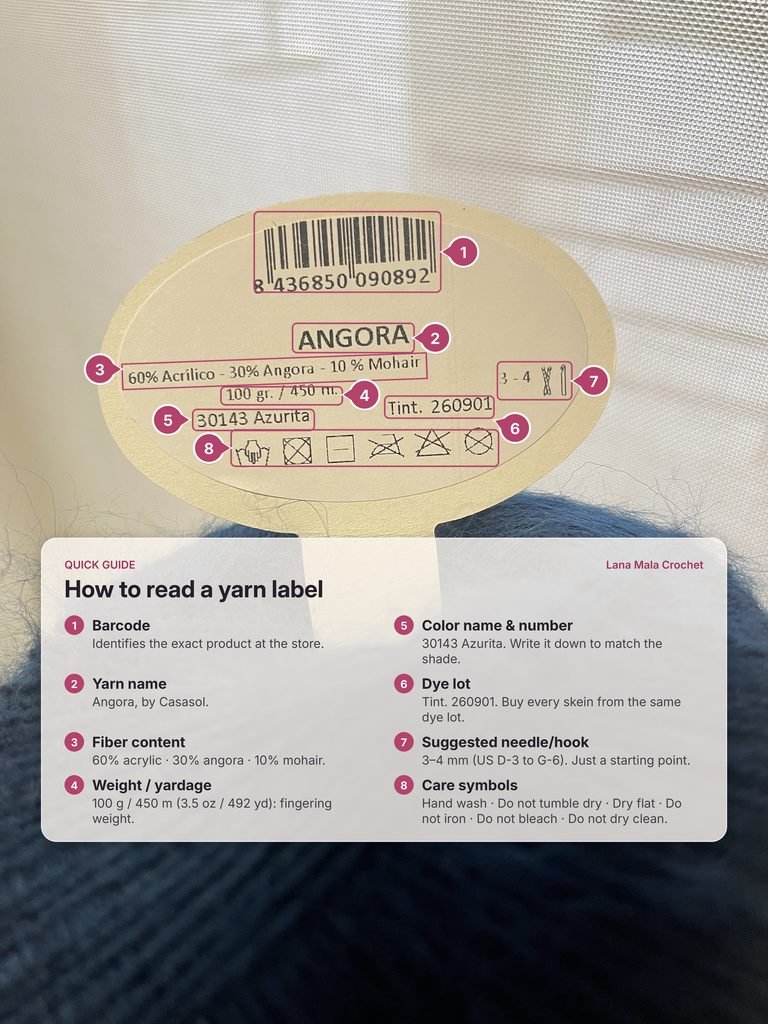
- Fiber content: which fibers it contains and in what percentage (100% cotton, 60% acrylic + 30% angora…).
- Weight: how much the skein weighs (50 g / 1.75 oz, 100 g / 3.5 oz…).
- Yardage: how many meters or yards of yarn are in the skein.
- Suggested hook or needle size: the manufacturer’s recommendation (more on this later, because there’s a catch).
- Manufacturer’s gauge: how many stitches and rows you get in 4 x 4 in (10 x 10 cm).
- Dye lot: key if you’re buying several skeins of the same color.
- Care symbols: how to look after your garment and whether you can steam block or wet block it.
Always keep one label from every yarn you use. Staple it into your project notebook or snap a photo. Future you will thank you when you want to make that garment again.
3 keys to substitute yarn in a crochet pattern
When a maker asks me whether she can swap one yarn for another, I always tell her to look at three essential things.
Not the color.
Not the brand.
And not even the suggested hook size.
What really matters is this:
1. Weight and yardage: the true thickness of the yarn
This is the first filter. And probably the most important one when we’re talking about sized garments.
The weight of a skein is how heavy it is (usually in grams or ounces) and the yardage is its length (in meters or yards).
Two skeins can weigh exactly the same and have very different yardages. On the label you’ll find something like this:
50 g / 180 m (1.75 oz / 197 yd) or 100 g / 450 m (3.5 oz / 492 yd)
These numbers tell you the relationship between weight and length:
- The more yards a yarn has for the same weight, the thinner it is.
- The fewer yards it has, the thicker it is.
So when you want to substitute a yarn, look for one with a similar weight-to-yardage ratio.
The 100-gram trick
To compare skeins of different sizes, convert them all to the same reference: meters (or yards) per 100 grams.
Meters per 100 g = (meters in the skein ÷ grams in the skein) × 100
For example, a 50 g / 180 m skein has 360 meters (394 yd) per 100 g. And a 100 g / 450 m skein has 450 meters (492 yd) per 100 g. At a glance, you know which one is thinner.
With that number you can figure out a crochet yarn’s weight category and place it among the most common ones (the yarn weight system used in the US by the Craft Yarn Council):
| Yarn weight | Approx. per 100 g | Suggested crochet hook | Great for… |
|---|---|---|---|
| Lace (0) | 500+ m / 550+ yd | 2–3 mm (B-1 to D-3) | Lacy shawls, very airy pieces |
| Fingering (1 – Super Fine) | 360–460 m / 395–500 yd | 2.5–3.5 mm (C-2 to E-4) | Fine tops, stoles, mohair blends |
| Sport (2 – Fine) | 280–360 m / 305–395 yd | 3–4 mm (D-3 to G-6) | Summer tops, light cardigans |
| DK (3 – Light) | 220–280 m / 240–305 yd | 4–5 mm (G-6 to H-8) | Transitional sweaters, accessories |
| Worsted (4 – Medium) | 180–220 m / 195–240 yd | 5–6 mm (H-8 to J-10) | Winter sweaters, blankets |
| Aran (4 – Medium) | 140–180 m / 155–195 yd | 5.5–7 mm (I-9 to K-10½) | Warm garments, bold textures |
| Bulky (5) | Under 140 m / 155 yd | 7–9 mm (K-10½ to M/N-13) | Quick projects, hats, chunky blankets |
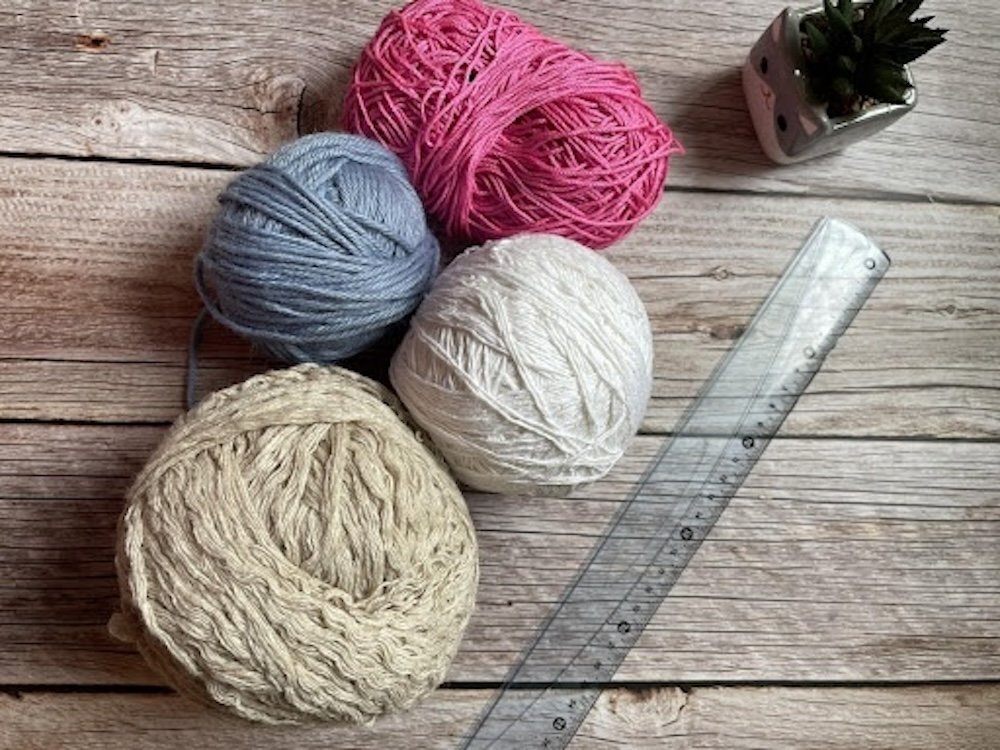
The numbers don’t need to match exactly. But they should fall roughly into the same category.
What if your skein has no label? It happens with recycled yarn, gifted yarn or yarn bought by weight. That’s what the WPI system (wraps per inch) is for: wrap the yarn around a ruler without gaps or tension, count how many wraps fit in 1 inch (2.5 cm) and compare the result with the Craft Yarn Council’s yarn weight chart.
What about holding two strands together?
Holding two thin yarns together is a great way to get a weight you don’t have. As a rough rule, two strands of the same weight go up one or two categories in the chart: two strands of fingering held together behave more or less like a DK or a light worsted.
It’s exactly what we often do when we pair mohair with a fingering yarn.
2. Fiber content matters more than you think
This is often where the difference lies between getting a result close to the original and ending up with a completely different garment.
Because two yarns can have the same weight and behave in totally different ways.
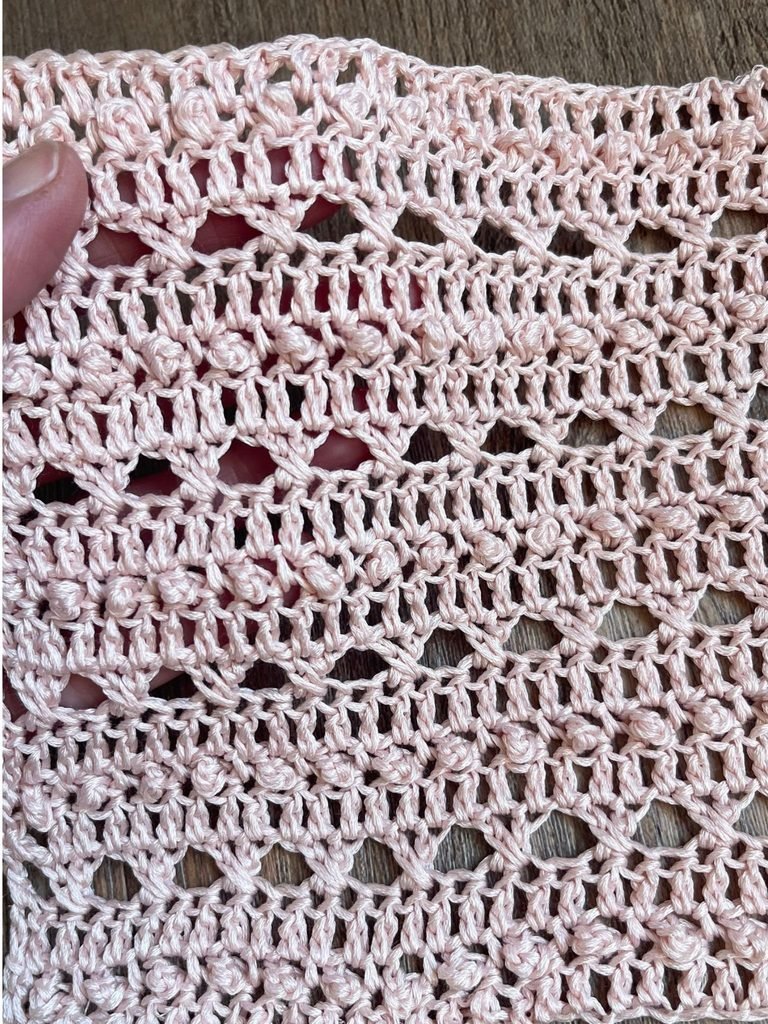
Bamboo
- Has lots of drape.
- It’s soft, with a beautiful natural sheen.
- Adds movement.
- Usually needs blocking to show its full potential.
Cotton
- Has more structure.
- Gives great stitch definition.
- Feels cool and is very durable.
Linen
- It’s lightweight.
- Cool.
- Very breathable.
- Gets softer with wear (and with every wash).
Mohair and angora
- Create an ethereal texture.
- Add volume without weight.
- Give that unmistakable cloud-like halo.
Wool (merino and similar)
- It’s warm and elastic.
- It has “memory”: it bounces back after stretching.
- It forgives small inconsistencies in your tension.
Silk
- Luxurious sheen and feel.
- Lots of drape and very little stretch.
- Perfect for garments that flow over the body, like my Xanath Poncho.
Acrylic
- Budget-friendly and easy to wash.
- A huge range of colors.
- Warm, but less breathable than natural fibers.
To see it all together, here’s a quick behavior chart:
| Fiber | Drape | Elasticity / memory | Warmth | Stitch definition |
|---|---|---|---|---|
| Cotton | Medium | Low | Low | Very high |
| Linen | Medium-high | Very low | Very low | High |
| Bamboo | Very high | Very low | Low | Medium-high |
| Silk | Very high | Very low | Medium | High |
| Merino wool | Medium | High | High | High |
| Mohair / angora | Medium | Medium | Very high | Low (halo effect) |
| Acrylic | Low-medium | Medium | Medium-high | High |
A detail hardly anyone mentions: weight “stretches” garments. Fibers with lots of drape and little memory (bamboo, silk, linen, cotton) tend to grow with wear, especially in longer pieces. If you swap a wool for a bamboo, expect your sweater to gain a little length. An easy fix: crochet the body slightly shorter than the pattern says and measure your swatch hanging, not just lying flat on the table.
So if a pattern is designed in bamboo, it will probably work best with fibers that behave in a similar way, such as linen, merino or viscose blends.
Can you substitute it with acrylic?
Of course.
Will it look bad?
Not necessarily.
But it will most likely be a different garment from the one the designer originally imagined. And that’s neither good nor bad. It’s simply important to know before you start.
And what about the crochet hook?
This one surprises a lot of makers. We tend to think the hook size on the label is a rule.
It isn’t. It’s just the manufacturer’s suggestion.
Your hook is a tool that works for you. Not the other way around.
You might need a 3 mm (D-3) hook to get a certain gauge, while someone else needs a 4 mm (G-6) hook with the exact same yarn. And you’re both crocheting correctly. Every maker’s tension is different.
We also often choose a specific hook because we want a certain effect:
- More drape.
- More stitch definition.
- A lighter fabric.
- A denser fabric.
The rule for adjusting is very simple:
- Getting more stitches than the pattern says in 4 in (10 cm)? Your fabric is tight: go up half or one hook size.
- Getting fewer stitches? Your fabric is loose: go down a hook size.
That’s why, when it comes to yarn substitution, I’d rather focus on weight, yardage and fiber content than on the suggested hook.
3. The yarn brand
These days there are so many brands with huge catalogs. And that makes finding equivalents easier than ever.
Some of my favorites for quality, variety and value are:
- Casasol: the brand I use for many of my designs. You can find their cotton, bamboo, angora and silk yarns in my shop.
- Drops: super handy for finding equivalents, because they sort all their yarns into weight groups (from A, the thinnest, to F, the thickest). If two yarns are in the same group, they’re usually interchangeable.
- Melissa: great variety at very reasonable prices.
A bonus resource: the Ravelry yarn database lets you look up almost any yarn, check its weight, yardage and fiber content, and see real projects made with it. It’s pure gold for comparing. (While you’re there, come say hi on my Ravelry designer page.)
Your gauge swatch: the best insurance before you start
I know. It’s the part we all want to skip.
But when you change yarns, your gauge swatch is no longer optional. It’s the only way to know whether your combination of yarn + hook + hands will give you the measurements in the pattern.
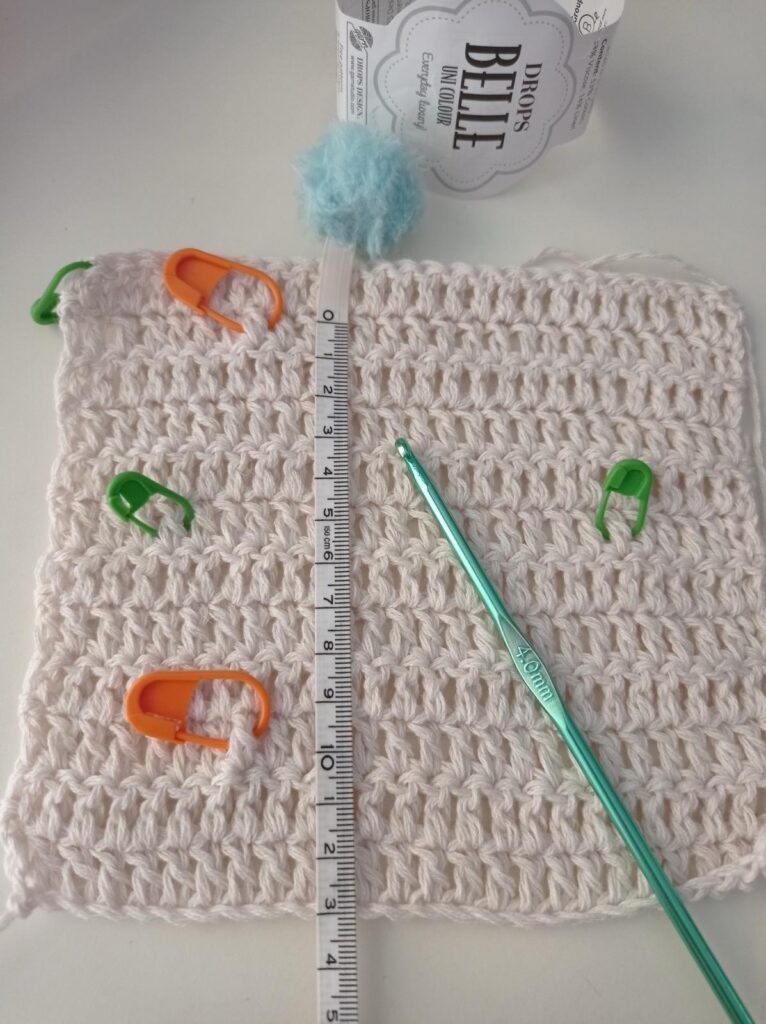
Here’s how I do it:
- I crochet a square about 6 x 6 in (15 x 15 cm) in the stitch pattern the pattern calls for (not in single crochet if the pattern uses something else).
- I wash and block it exactly as I will the finished garment. Some fibers change a lot when wet.
- I let it dry completely.
- I measure 4 x 4 in (10 x 10 cm) in the center, away from the edges, and count stitches and rows.
- I compare with the pattern and, if it doesn’t match, I change my hook and try again.
Prefer to watch it? I have two tutorials on my YouTube channel that go perfectly together (they’re in Spanish, but you can turn on auto-translated English captions):
- 🎥 How to make a crochet gauge swatch, step by step.
- 🎥 Using simple proportions to calculate measurements in your crochet: crochet math made easy, so you can go from your swatch to the real measurements of your garment.
How much yarn do I need if I substitute yarn?
This is the mistake that causes the most heartbreak: buying the same number of skeins the pattern calls for… in a yarn that has less yardage.
When you substitute yarn, always calculate by yardage, never by number of skeins.
- Multiply the number of skeins in the pattern by the yardage of each original skein. That’s the total yardage you need.
- Divide that total by the yardage of your new skein.
- Always round up and add a 10% margin (or one extra skein).
Example: if your size called for 5 skeins of a 50 g / 180 m (197 yd) yarn, you’d need 900 m (984 yd). With a 50 g / 160 m (175 yd) yarn: 900 ÷ 160 = 5.6. That means 6 skeins, and 7 to be on the safe side.
And a golden tip: buy all your skeins from the same dye lot. Two skeins of the “same” color from different dye lots can have slightly different shades, and it really shows in a garment.
Real example: the Luz Top
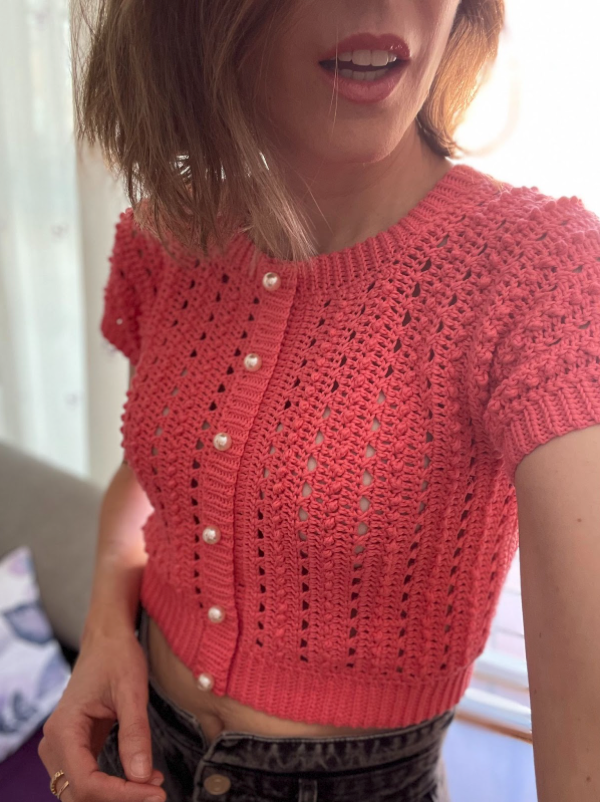
The Luz Top is a sized pattern. And when we work with sizes, it pays to be more careful when choosing the yarn.
| Recommended yarn | Alternative yarn | |
|---|---|---|
| Yarn | Casasol Cupcake | Drops Safran |
| Fiber content | 100% cotton | 100% cotton |
| Weight / yardage | 50 g / 180 m (197 yd) | 50 g / 160 m (175 yd) |
| Per 100 g | 360 m (394 yd) | 320 m (350 yd) |
| Yarn weight | Sport (2 – Fine) | Sport (2 – Fine) |
Why does this substitution work?
Because both yarns have the same fiber content and fall into the same weight category. Notice, though, that Safran has 20 m (22 yd) less per skein: if you switch to it, recalculate your skeins with the formula above so you don’t run short on the last stretch.
Even so, a gauge swatch is still essential to make sure you get the right measurements.
👉 The Luz Top pattern includes its Testers’ Book, with all the versions crocheted by my testers in different colors and sizes. Here’s a sneak peek:
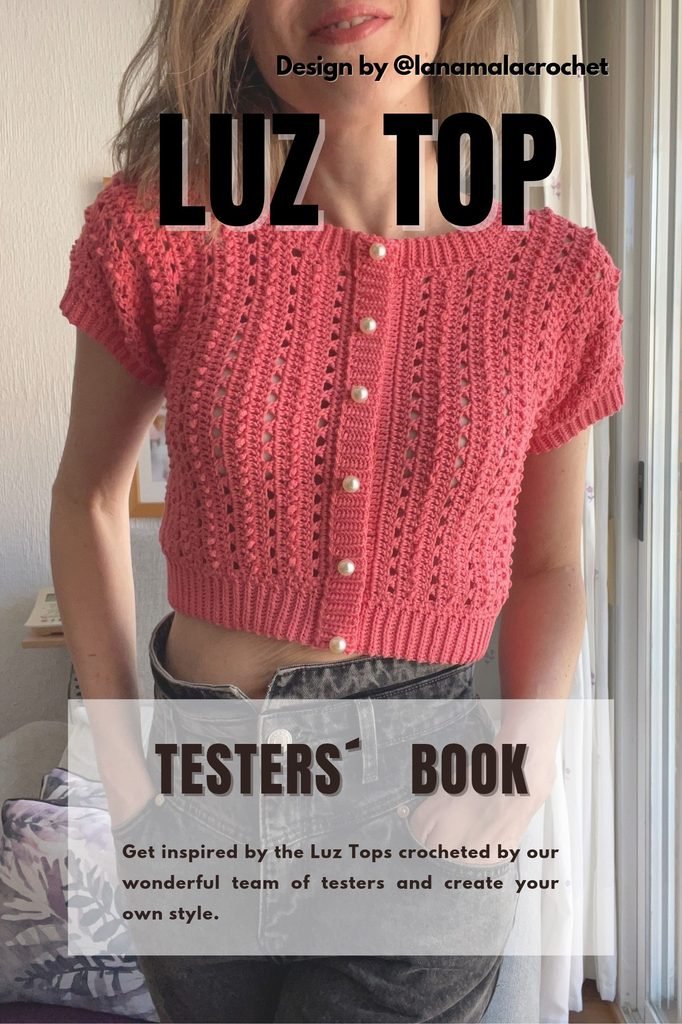
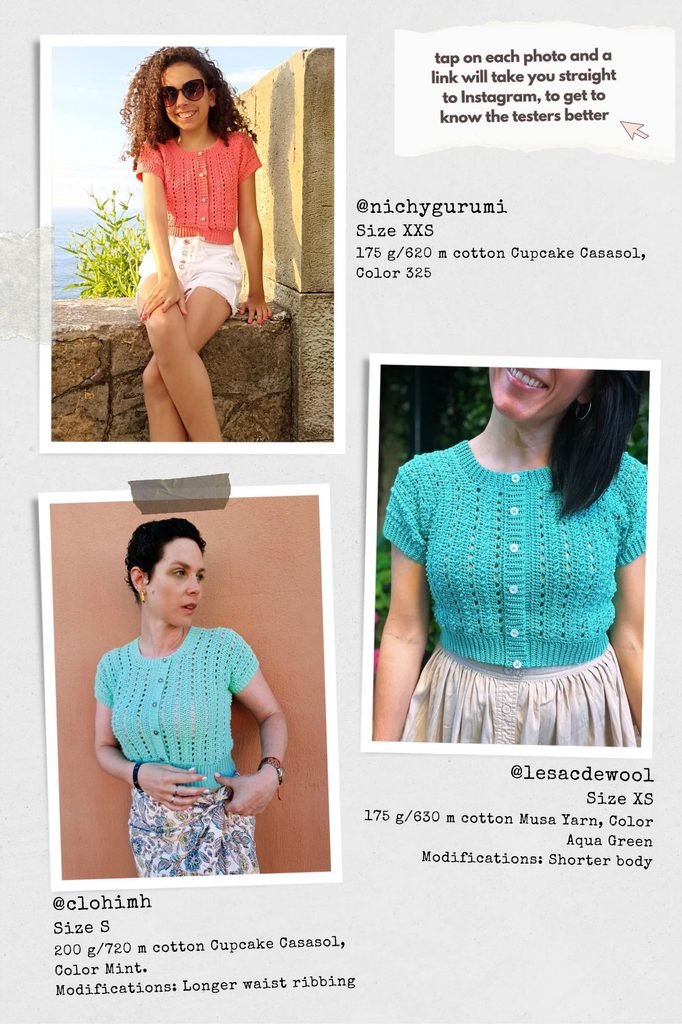
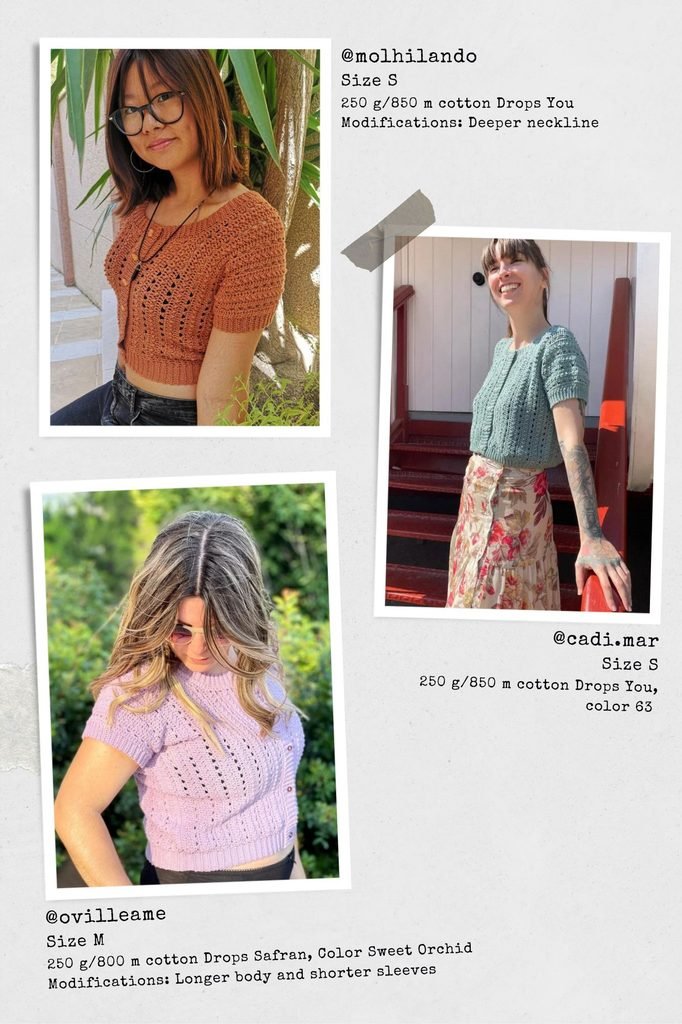
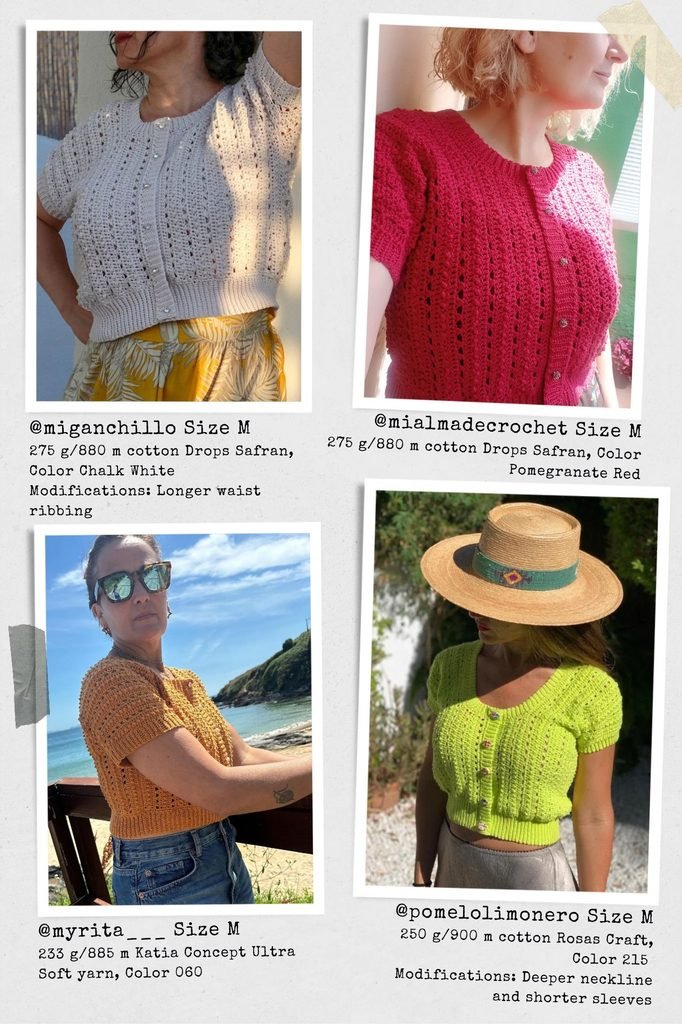
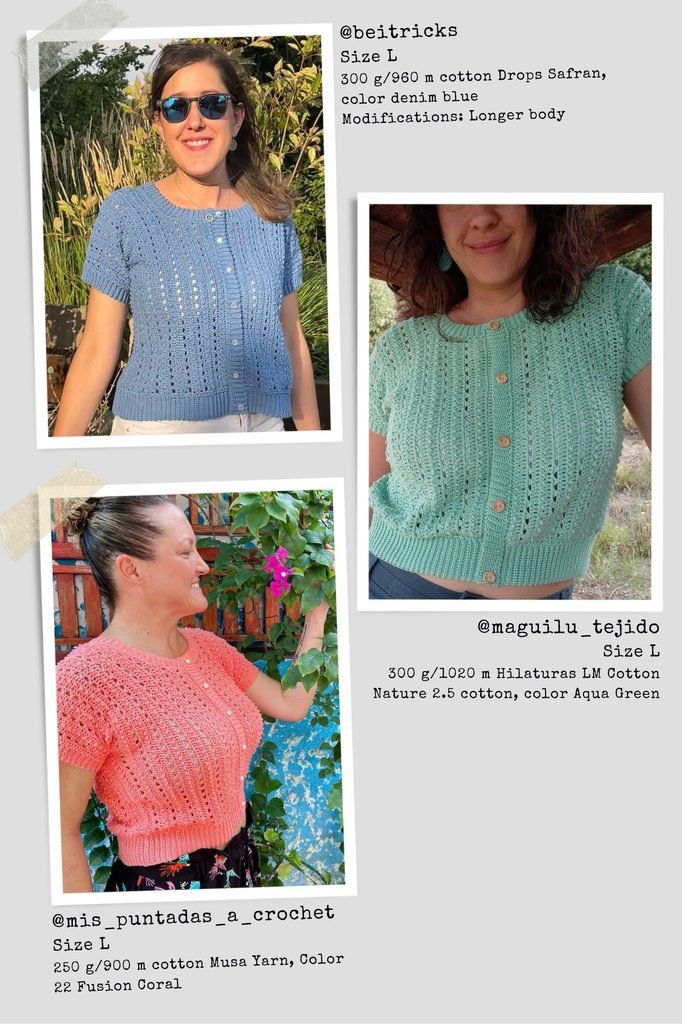
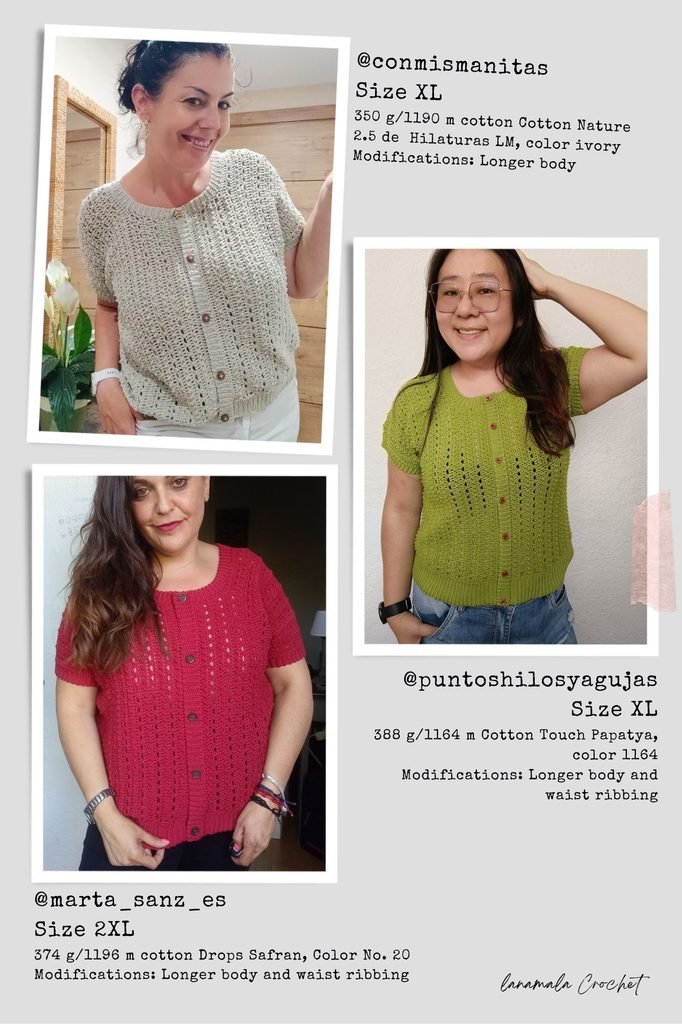
The 6 pages of the Luz Top Testers’ Book: different sizes, colors and makers.
Real example: the Komorebi Stole
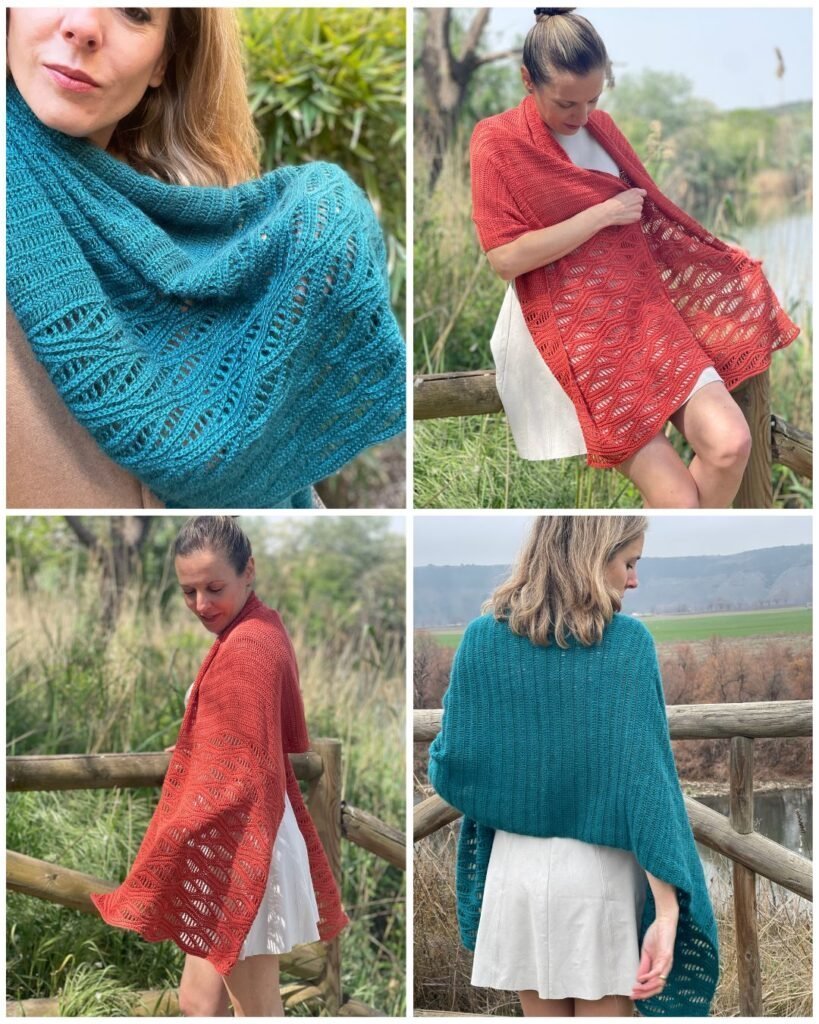
The Komorebi Stole lets us be much more flexible.
Why?
Because it isn’t sized. And when a piece doesn’t depend on exact measurements, small variations in size or drape matter much less. The pattern also explains how to adjust the width and length to your liking.
| Recommended yarn | Alternative yarn | |
|---|---|---|
| Yarn | Casasol Angora | Casasol Bamboo M |
| Fiber content | 60% acrylic, 30% angora, 10% mohair | 100% bamboo |
| Weight / yardage | 100 g / 450 m (492 yd) | 100 g / 300 m (328 yd) |
| Yarn weight | Fingering (1 – Super Fine) | Sport (2 – Fine) |
| Best season | Fall-winter | Spring-summer |
Will the result be identical?
No.
And that’s exactly where the magic is.
The angora version is lighter, airier and cozier. The bamboo version has more drape, feels cooler and moves in a completely different way.
Notice that here I even jumped a weight category (from fingering to sport). In a sized garment that would be risky. In a stole, you simply get a slightly larger, heavier piece. Just keep in mind that bamboo has less yardage per skein, so you’ll need more of it: calculate by yardage again.
Same pattern. Different feel.
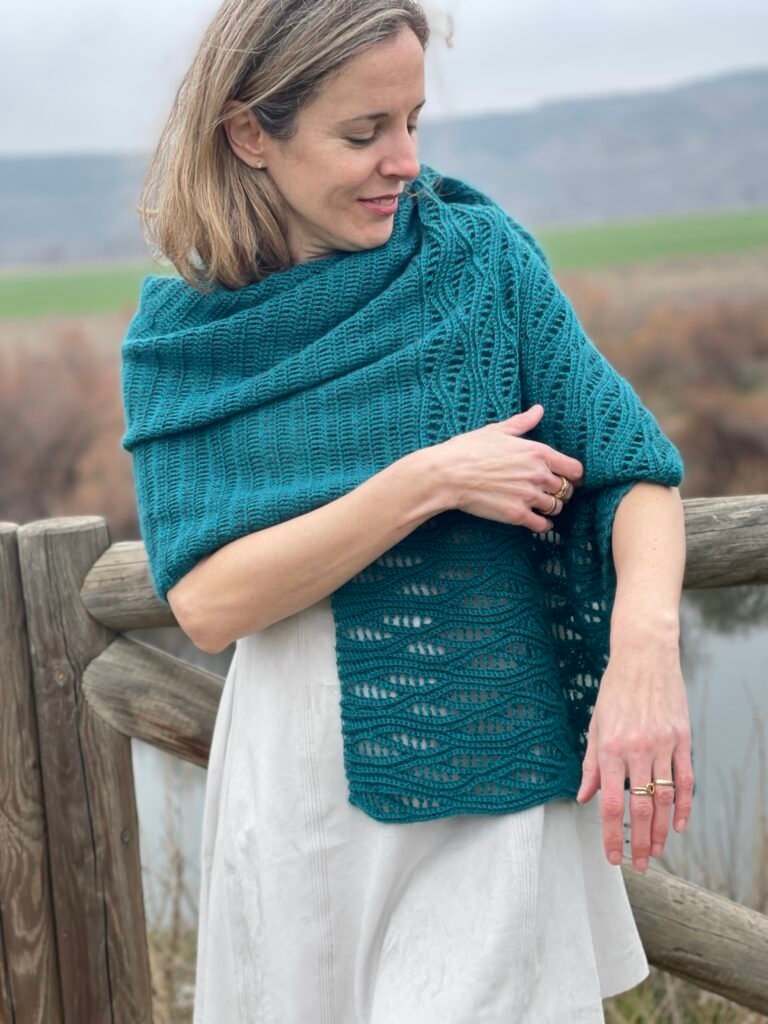
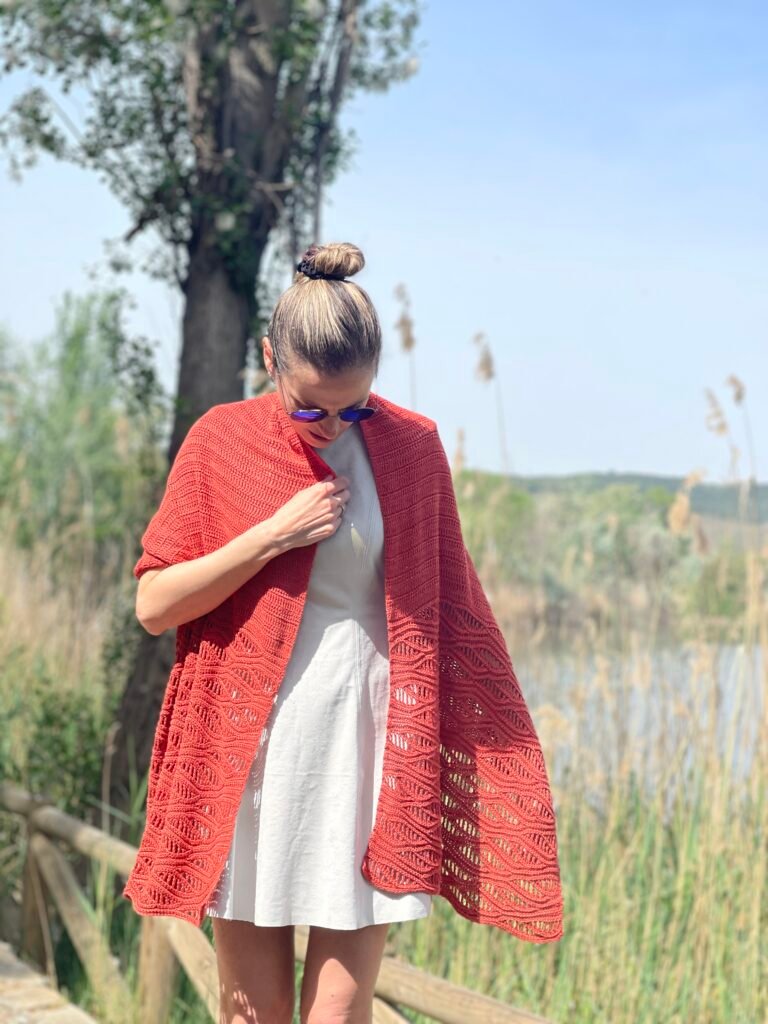
Want to make it without worrying about equivalents? There’s a Komorebi Stole kit in angora and a kit in bamboo, with the pattern and just the right amount of yarn.
5 common yarn substitution mistakes (and how to avoid them)
- Judging yarn weight by eye. Two yarns can feel the same in your hand and differ by 80 m (87 yd) per 100 g. Always compare the numbers.
- Buying by skeins instead of by yardage. The fastest way to run out of yarn one sleeve short.
- Skipping the gauge swatch. In sized garments, just one stitch of difference every 4 in (10 cm) can add up to several inches around the finished piece.
- Not blocking your swatch. Bamboo, linen and silk change a lot when washed. Always measure after blocking.
- Forgetting how the garment will be used. A summer top in acrylic can feel too warm. A winter sweater in linen won’t keep you warm. Think about when and how you’ll wear it.
Quick checklist before you substitute yarn
- ☐ I’ve calculated the meters (or yards) per 100 g for both yarns and they’re in the same category.
- ☐ I’ve compared the fiber content and I know what will change (drape, warmth, elasticity).
- ☐ I’ve calculated the total yardage and the number of skeins I need, with a margin.
- ☐ All my skeins are from the same dye lot.
- ☐ I’ve crocheted, blocked and measured my gauge swatch.
- ☐ I’ve looked at the Testers’ Book or other makers’ projects for inspiration.
FAQ: how to substitute yarn in crochet
Can I substitute the yarn in a crochet pattern with a thicker one?
For pieces that aren’t sized (stoles, shawls, blankets), yes, knowing your piece will turn out bigger and heavier. For sized garments I don’t recommend it, unless the pattern explains how to adapt it or you know how to recalculate stitches and rows.
Can I swap cotton for acrylic?
Yes. Many acrylic yarns come in similar weights and are more affordable. Your garment will be a bit warmer, less breathable and will drape differently. For a summer top, cotton, linen or bamboo are still the better choice.
How can I tell the weight of a yarn with no label?
Use the WPI (wraps per inch) method: wrap the yarn around a ruler, count how many wraps fit in 1 inch (2.5 cm) and compare with a yarn weight chart like the Craft Yarn Council’s.
Do I have to use the hook size on the label?
No. It’s just a suggestion. The right hook is the one that gets you the pattern’s gauge with your hands and your way of crocheting.
How much extra yarn should I buy?
Calculate by yardage, round up and add a 10% margin. For large garments, or if you plan to make them longer, get one extra skein from the same dye lot.
The skill that will help you grow as a maker
If I had to pick just one skill that makes the difference between following patterns and truly understanding crochet, it would probably be this one:
Learning to substitute yarn in a crochet pattern.
Because it’s not just about using up the skeins you already have at home.
It’s about understanding your materials better.
Anticipating results.
Developing your own judgment.
And gaining creative freedom.
The next time you find a pattern you love and don’t have the exact recommended yarn, don’t close the page. You might already have the perfect substitute at home.
You just need to know how to spot it.
And trust me: once you learn how, a whole world of possibilities opens up.
What about you? Have you ever substituted a yarn and been surprised by the result (for better or for worse)? Tell me in the comments or tag me on Instagram: I love seeing your versions.
And if you want to keep learning, subscribe to my newsletter and stop by my YouTube channel for step-by-step tutorials.
💛 Happy crocheting,
Ana
Lana Mala Crochet