
Hello, yarn and crochet lovers!
If you have ever wondered which yarn is the ideal one for your next project, you are in the right place! Today we are going to chat in a friendly, fun way about the wonderful world of yarn. I will tell you all about natural vs. synthetic fibers and yarn weights, and of course I will give you some foolproof tips to choose the perfect yarn.
Ready? Let’s go!
1. Natural vs. Synthetic Fibers
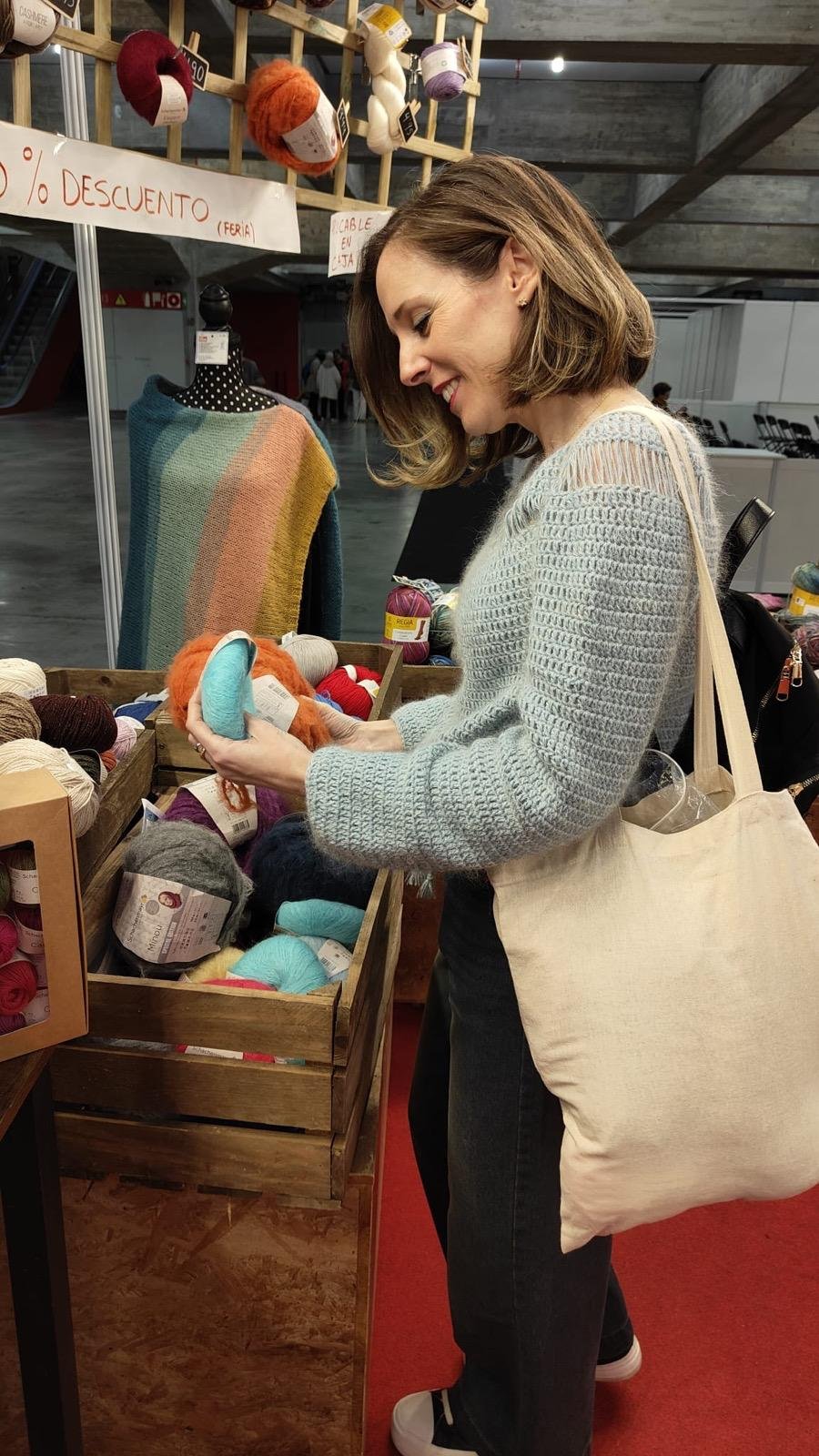
Imagine you are in a yarn shop surrounded by colors and textures. What a temptation, right?!
Natural fibers
Natural fibers are like those genuine friends who give you warmth and company.
What are they? They come from animals (like sheep or alpaca wool) and plants (like cotton or linen).
Pros
• Super breathable and comfortable!
• They have that natural, organic touch that always charms.
• Ideal for soft, warm garments (like winter sweaters and scarves).
Cons
• They sometimes need special care (hand washing, drying flat, etc.).
• They can be a little more expensive, but worth every penny!

Synthetic fibers
Synthetic fibers are like those practical, versatile friends who always have a quick solution.
What are they? They are made from chemical compounds, such as acrylic, polyester or nylon.
Pros
• Affordable and easy to care for (even machine washable!).
• They come in endless colors and styles, perfect for quick, fun projects.
Cons
• They are not as breathable as natural fibers and can feel “plastic.”
• Their environmental impact varies depending on how they are made.
2. Yarn Weights
This is where the magic of crocheting literally takes shape! Knowing the yarn weights will help you choose the most suitable yarn for each project.
| Weight | Description | Best for |
|---|---|---|
| Lace | Ultra-fine, almost ethereal yarn, ideal for lace. | Delicate shawls and ornamental pieces. |
| Fingering / Sock / Baby | Fine, but with more body than lace. | Socks, baby clothes, lightweight tops. |
| Sport / DK | Versatile and friendly: not too thin, not too thick. | Sweaters, accessories, children’s clothes. |
| Worsted / Aran | A classic, ideal for most projects. | Scarves, hats, blankets, sweaters. |
| Bulky / Chunky | Thick and comforting, ideal for crocheting fast. | Winter garments, cozy blankets. |
| Super Bulky / Jumbo | Extra thick and eye-catching, perfect for big projects. | XXL blankets, decor. |
Yarn Weight Chart / WPI System
| Weight | Approx. yards per 3.5 oz (100 g) | Wraps per inch (WPI) | Recommended hook size |
|---|---|---|---|
| Lace | Over 547 yd (500 m+) | Over 30 | 2–3 mm (US B-1 to C-2) |
| Fingering | 437 yd (400 m) | 20–25 | 2.5–3.5 mm (US C-2 to E-4) |
| Sport | 328 yd (300 m) | 15–18 | 3–4 mm (US D-3 to G-6) |
| DK | 273 yd (250 m) | 12–14 | 4–5 mm (US G-6 to H-8) |
| Worsted | 164 yd (150 m) | 9–11 | 6–8 mm (US J-10 to L-11) |
| Bulky | 109 yd (100 m) | 7–8 | 7–9 mm (US K-10.5 to M/N-13) |
And I have good news: on my blog you can find a whole in-depth post about How to Choose the Right Yarn Weight with the WPI System (Wraps Per Inch). Click the link to read it.
3. Tips for Choosing the Right Yarn
1. Think about the project and the season
• Summer: cool, natural yarns like cotton or linen.
• Winter: thick wools or acrylics for extra warmth.
2. Consider the type of garment
• Delicate garments: soft, high-quality yarns.
• Everyday wear: durable materials that are easy to wash.
3. Keep your skill level in mind
• Beginners: medium-weight yarns (worsted), so you can see the stitches clearly.
• Advanced: fine or textured yarns to challenge your skills.
4. Budget and quality
• Budget-friendly: acrylics and synthetic blends.
• Special investment: premium natural fibers for exclusive projects.
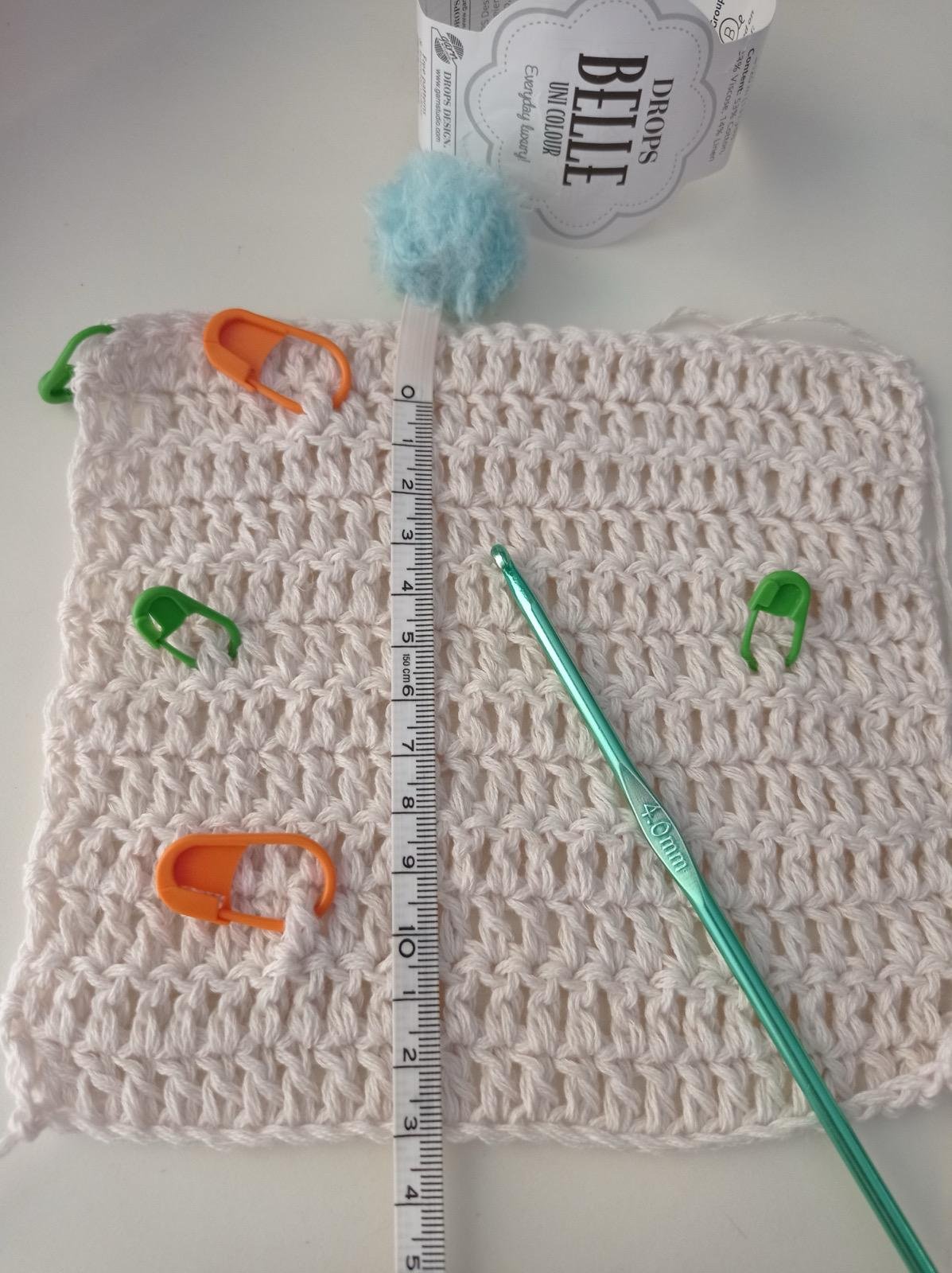
5. Check the label and make a gauge swatch
• Label: read the information on weight, recommended hook size and care.
• Gauge swatch: don’t skip this step!
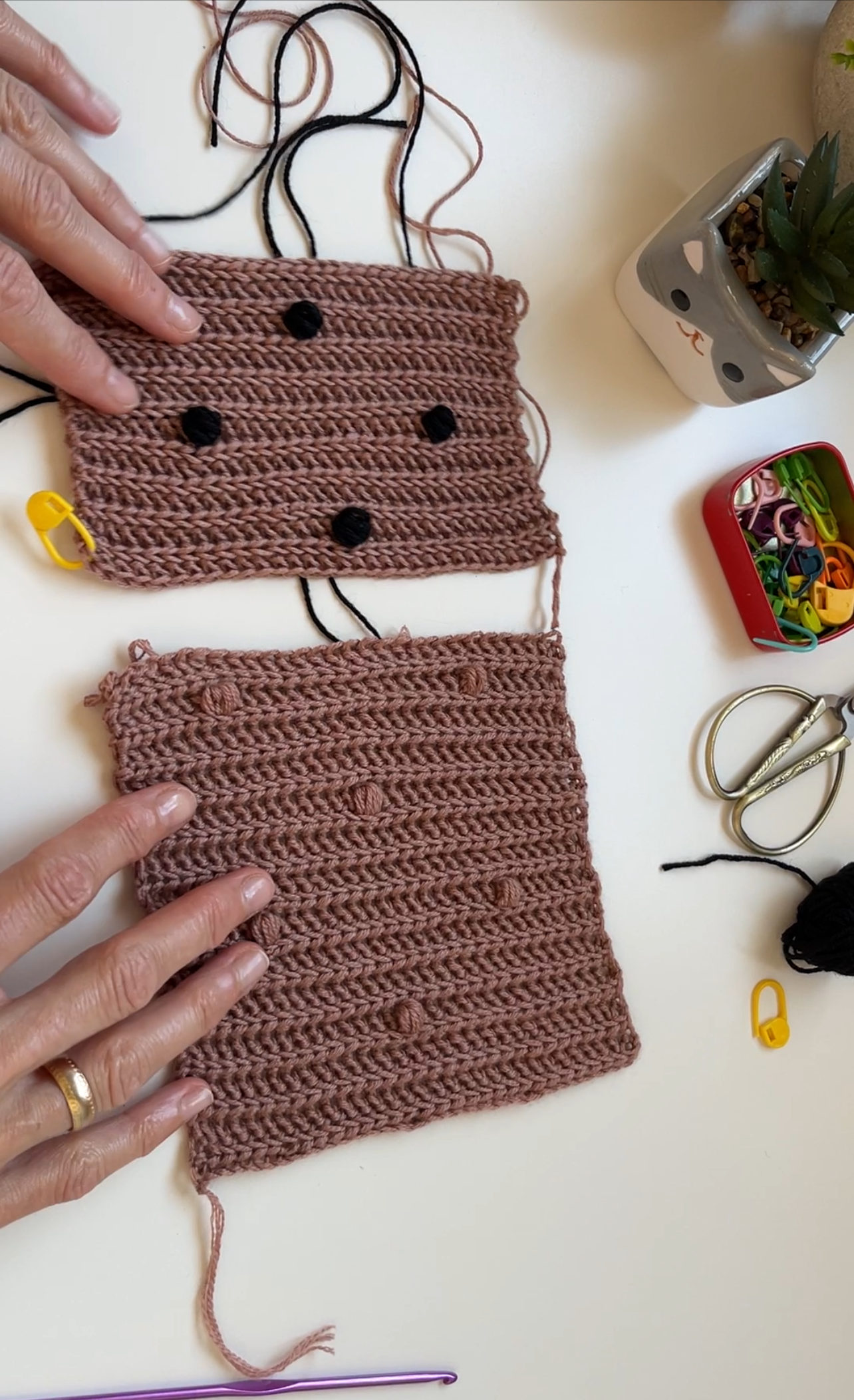
If you want to learn more about how to crochet a gauge swatch and why it is key, don’t miss my YouTube video (available in English)!
Choosing the perfect yarn for each project is like choosing the soundtrack of a movie: it makes all the difference!
By knowing the differences between natural and synthetic fibers, understanding yarn weights and following these little tips, you will be ready to crochet with lots of passion and style.
If you liked this post, don’t forget to check out Episode 5 of my podcast (in Spanish), where I go deeper into these topics with Marga from @maguilu_tejido.
Share your projects, anecdotes and questions in the comments! Together, we weave stories and create unique moments.
Until next time, and happy crocheting!
ANA
Read next: How to Substitute Yarn in a Crochet Pattern: 3 Keys to Get It Right.
